If you need to transport construction equipment, heavy machinery, commercial vehicles, or another large piece of equipment, you may hear the terms wide load and oversize load used during the planning process.
Although they’re often used interchangeably, they don’t mean exactly the same thing.
A wide load specifically refers to a vehicle or load that exceeds applicable width limits. An oversize load is a broader category that can involve excessive width, height, length, or other applicable dimensional limits. Requirements can vary depending on the state and route, making accurate measurements and transportation planning especially important.
Here’s what businesses should know before moving large equipment.
What Is a Wide Load?
A wide load is a load that exceeds the legal width allowed for normal travel on a particular roadway.
On the federal National Network, the standard maximum vehicle width is generally 102 inches, or 8 feet 6 inches. The Federal Highway Administration (FHWA) notes that states may grant special-use permits for vehicles exceeding that federal 102-inch width limitation.
That can become particularly relevant when transporting construction and heavy equipment.
A machine itself may fit comfortably on a trailer, for example, while tires, a blade, bucket, attachment, or another component increases the total width of the loaded equipment.
If that total width exceeds the applicable limit, the transportation plan may need to account for the load’s wider dimensions.
What Is an Oversize Load?
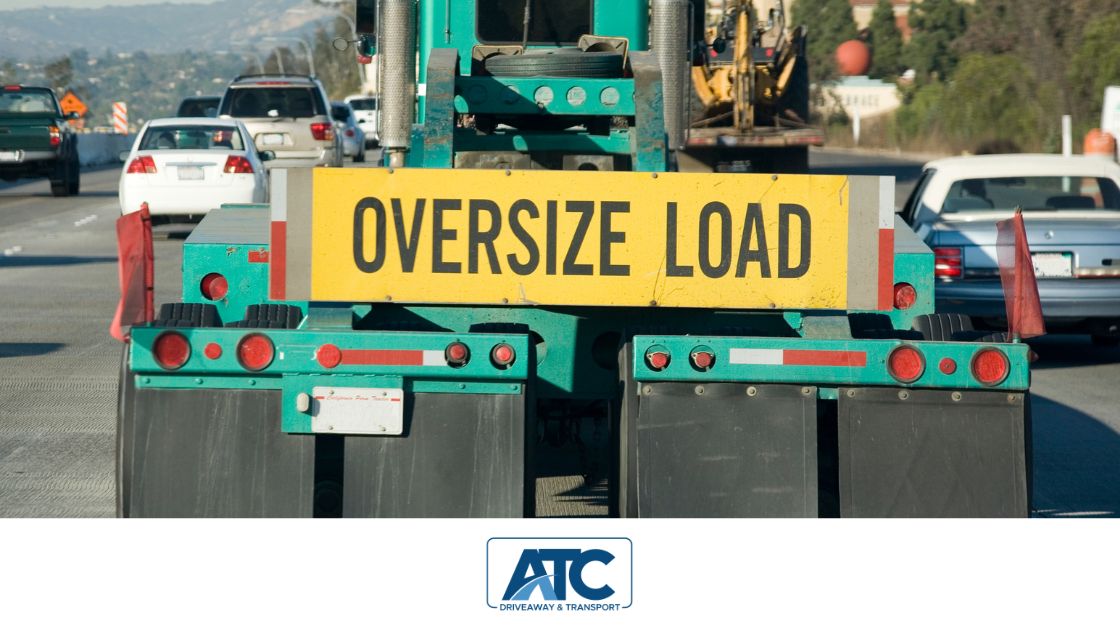
Oversize load is a more general term.
Rather than referring specifically to width, it describes a vehicle or load that exceeds applicable legal size limitations. Depending on the equipment and jurisdiction, the concern could involve width, height, length, or a combination of dimensions.
Weight is typically addressed separately as an overweight load. FHWA lists federal Interstate limits including 80,000 pounds gross vehicle weight, 20,000 pounds for a single axle, and 34,000 pounds for a tandem axle, while noting that axle spacing must also be considered.
In other words, a load doesn’t necessarily have to be unusually wide for special transportation considerations to apply.
Wide Load vs. Oversize Load: The Simple Difference
The easiest way to understand the difference is this:
A wide load is oversized because of its width. An oversize load may exceed legal limits because of its width, height, length, or multiple dimensions.
Imagine a piece of construction equipment with a wide blade. Its width could make it a wide load.
Another piece of machinery may fit within the applicable width limit but become too tall once loaded onto a trailer. That could still create an oversize transportation situation, even though the equipment isn’t particularly wide.
This is why knowing the exact dimensions of the equipment is so important before arranging transportation.
What Equipment May Require Oversize Transport?
Heavy equipment comes in countless configurations, so there isn’t one list of machines that automatically qualify as oversize.
Depending on their specifications and how they’re configured for transportation, large construction equipment, industrial machinery, agricultural equipment, commercial vehicles, or other specialized assets may exceed applicable limits.
Attachments matter as well. A piece of equipment could have very different transportation dimensions depending on how it is prepared for the move.
For ATC customers, this is why detailed information about the equipment is important from the beginning. Transportation should be planned around the actual asset being moved, not simply its general equipment category.
Do Wide and Oversize Loads Require Special Permits?
Depending on the dimensions, weight, route, and jurisdictions involved, permits may be required.
Importantly, the federal government does not issue oversize or overweight permits. FHWA explains that permitting is handled by states. States may issue permits for certain nondivisible vehicles or loads and can grant special-use permits for vehicles exceeding the federal 102-inch width limitation.
That makes route planning an important consideration when transporting equipment across state lines.
A move that passes through several states may be subject to different state requirements along the way. The equipment’s dimensions therefore need to be considered alongside its origin, destination, and planned route.
Why Trailer Selection Matters
The trailer carrying the equipment can make a major difference in the overall dimensions of the loaded combination.
For certain equipment, a flatbed trailer may provide an appropriate solution. Taller equipment may benefit from the lower deck of a step deck, while larger machinery may require a lowboy or another specialized transportation solution.
The goal is to match the transportation method to the equipment.
Height, width, length, weight, configuration, and loading requirements all need to be considered when determining how a piece of heavy equipment should be moved.
Accurate Measurements Make a Difference
One of the most useful things you can do before arranging heavy equipment transport is provide accurate information about the load.
Don’t rely solely on the manufacturer’s general specifications, particularly if the equipment has been modified or has additional attachments.
The transportation plan should account for the equipment in the configuration in which it will actually be moved.
Providing accurate information upfront gives the transportation provider a clearer understanding of the load and helps determine an appropriate equipment and transportation approach.
Heavy Equipment Transport Requires More Than a Truck
Transporting large machinery isn’t a one-size-fits-all process.
The dimensions and weight of the equipment, transportation method, trailer configuration, pickup and delivery locations, and route can all play a role in how the move needs to be planned.
That’s especially true with construction and heavy equipment, where two machines used for similar purposes can have very different transportation requirements.
Working with an experienced transportation provider helps businesses evaluate those details before the equipment begins its journey.
Move Heavy Equipment With ATC
ATC provides transportation solutions for construction equipment, heavy machinery, commercial trucks, specialized vehicles, and other large assets.
Whether your equipment requires a flatbed, step deck, lowboy, or another transportation solution, ATC can help coordinate a move around the specific requirements of your equipment.
ATC also provides driveaway services for appropriate road-ready commercial vehicles, giving customers access to multiple ways to get vehicles and equipment where they need to go.
Have a wide or oversize piece of equipment that needs to move? Contact ATC to discuss your equipment, dimensions, route, and transportation needs.